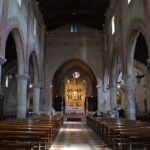
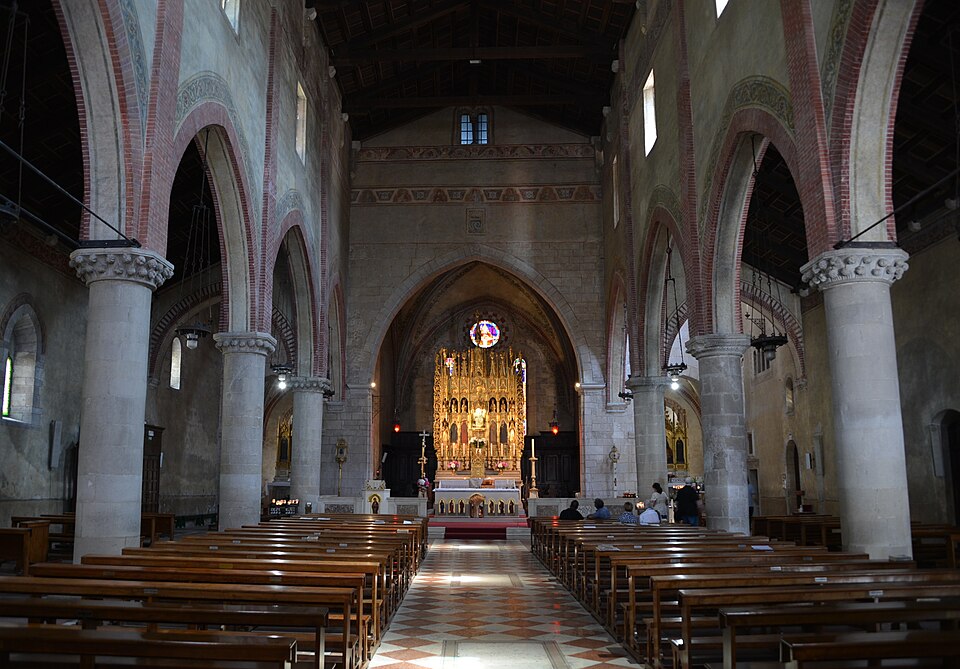
L’ abbazia Santa Maria di Follina è un complesso monastico che sorge ai piedi delle Prealpi Trevigiane. La sua iniziale conformazione si deve all’opera dei monaci cistercensi, giunti in valle – l’antica Valmareno – attorno alla metà del XII secolo. La nuova costruzione viene avviata su un sito già interessato da un insediamento, del quale non si hanno ad oggi informazioni, ma che è testimoniato dal ritrovamento, nel Primo Dopoguerra, dei resti architetonici sotto la pavimentazione della chiesa.
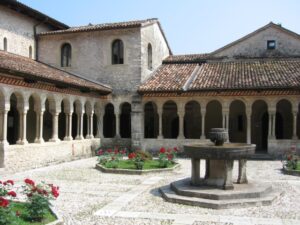
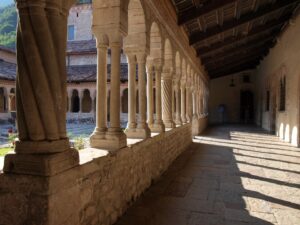
Il cantiere cistercense – che come indicato da San Bernardo doveva sorgere nei pressi dell’acqua, del monte, del piano e assicurare il silenzio – vede affiancati tra loro il luogo di culto con gli ambienti della vita quotidiana, raccordati dalla costruzione del chiostro nel 1268. Quest’ultimo, vero cuore pulsante dell’abbazia, si distingue per la selva di capitelli fogliati, a rappresentare in un’elegante foresta pietrificata la diversità della natura, vera maestra del monaco.
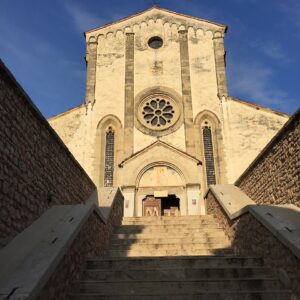
Architettura e scultura, pensati e realizzati come riflesso della sobrietà cistercense, vengono arricchiti nel XIV secolo dal completamento della facciata e da nuove note di colore : simboli mariani e cristologici negli archetti del sottogronda e due fasce con angeli e personaggi del Nuovo Testamento all’interno della chiesa, sopra l’arco trionfale.
Un’ulteriore fase storica si apre nel 1421, quando, con i cistercensi ancora presenti – e documentati fino al 1465, anche se in numero ridotto – a Follina viene istituita la commenda. A questo periodo, caratterizzato dall’amministrazione di abati non risiedenti presso l’abbazia, si deve la costruzione del secondo chiostrino nelle sua attuali linee cinquecentesche, oltre alla realizzazione di opere d’arte all’interno della chiesa. In particolare è d’obbligo citare tra gli affreschi la Sacra Conversazione del pittore Francesco da Milano del 1527, raffigurante il committente e i santi della sua devozione su di uno sfondo collinare tipico della pittura veneta. Fondamentale tra gli abati commendatari è la figura di San Carlo Borromeo, che tra il 1561 e il 1572 si adopera per ripristinare la presenza di una comunità monastica. In tal modo Follina vede l’arrivo dei camaldolesi, ai quali si deve l’abbandono della sobrietà cistercense in favore del gusto barocco, con l’aggiunta delle tipiche decorazioni in stucco e di nuovi altari laterali, successivamente smantellati. Di questo periodo, particolare menzione merita il monumentale crocifisso ligneo posto ora in navata destra, caricato espressivamente dei patimenti della Passione per un maggiore coinvolgimento emotivo del fedele. Per un nuovo intervento della Setrenissima – il primo già con i cistercensi, con la loro soppressione formale nella prima metà del XV secolo -, i monaci camaldolesi lasciano la guida del complesso abbaziale nel 1771. Nel 1774 il chiostro viene venduto all’asta e trasformato in abitazioni con la conseguente chiusura del colonnato duecentesco e la divisone delle gallerie in stanze. Nonostante i ripetuti tentativi di ripristino delle linee originali nei decenni a cavallo del XIX e XX secolo, solo con l’arrivo dei frati Servi di Maria nel 1915 e, successivamente, con la fine del conflitto, l’abbazia vede un ritorno alla sua originaria purezza formale.
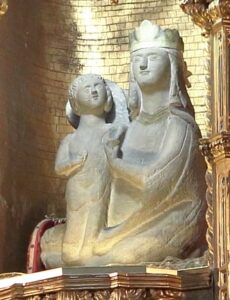
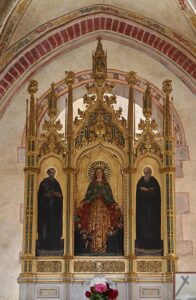
L’opera di pulizia, seppure eccessivamente marcata dall’intervento di restauro del Primo Dopoguerra, lascia spazio all’interno della basilica ad un manufatto in aperto contrasto estetico : sull’altare maggiore appare infatti dal 1921 una grande ancona neogotica in legno dorato – scolpita ad imitazione del quattrocentesco polittico di San Zaccaria a Venezia – la quale fa da cornice all’antico simulacro della Madonna di Follina. Questa, scolpita in pietra assieme con il suo Bambino, contrappone delle origini ancora incerte alla certezza di una secolare devozione mariana, che richiama ancora oggi dai territori limitrofi numerosi pellegrini affamati di bellezza e do spiritualità.

The Abbey Santa Maria of Follina is a monastic complex situated at the foot of the Treviso Prealps. Its initial layout is due to the work of Cistercian monks, having arrived in the valley – ancient Valmareno – around the middle of the 12th century. Construction of the new building is commencing on a site that already features an exsisting settlement, about which no information is available to date, but which is evidenced by the discovery, in the immedite post-war period, of architectural remains under the church flooring.
The cistercense construction site – which, as perscribed by Saint Bernard, had to be located near water, of the mountain, the plain and ensure silence – it sees side by side the place of workship with the place for daily life, linked by the construction of the cloister in 1268. The latter the beating heart of the abbey, it is distinguished by the numerous religious foliate capitals, to represent the diversity of nature in an elegant petrified forest, the monk’s true teacher.
Architecture and sculpture, conceived and created as a reflection of cistercian sobriety, they were enriched in the 14th century by the completion of the facade and by new touches of color : marian and christological symbol in the small arches of the under gutter and two bands featuring angels and New Testament figures inside the church, above the triumphal arch.
A further historical phase began in 1421, when, with the cistercians still present – and documented up to 1465, even if in reduced numbers – the commenda is established in Follina. In this period, characterizied by the administration of abbots who did not reside at the abbey, the construction of the second small cloister with its current sixteenth century lines, in addition to the creation of artworks within the church. In particular the Sacred Conversation by the painter Francesco da Milano dating from 1527 must be mentioned among the frescoes, depicting the patron and the saints to whom he was devoted set against a hilly background typical of <venetian paiting.
Primary between the commendatory abbots is the figure of Saint Charles Borromeo, who worked between 1561 and 1572 to restore the presence of a monastic community. In this way Follina saw the arrival of the camaldolese monks, to whom the abandonment of cistercian sobriety in favaor of baroque taste is attribuited, with the addition of typical pluster decoration and new side altars, subsequently dismantled. In this period, the monumental wooden crucifix now located in the right nave, deserves special mention, espressly burdened with the suffering of the Passion to foster a deeper emotional connection for the faithful.
For a new intervention by the Serenissima, the first already with the cistercians, with their formal suppression in the first half of the 15th century, the camaldolese monks relinquised leadership of the abbey complex in 1771.
In 1774 the cloister was sold at auction and converted into housing resulting in the enclosure of the 13th century colonnade and the subdivision of the galleries into rooms. Despite repeated attempts to restore the original lines during the decades spanning the 19th and 20th century, only with the arrival of the Servi of Maria friars in 1915 and, subsequently, with the end of the conflict, the abbey sees a return to its original formal purity.
The cleaning work, even though excessively marked by the restoration work carried out in the immediate post-war period, it makes way inside the basilica for a structure that stands in stark aesthetic contrast : indeed since 1921 a large neo-gothic glided-wood altarpiece has stood on the high altar – sculpted in imitation of the 15th century polyptych of San Zaccaria in Venice, which frames the ancient statue of the Madonna of Follina. This one carved in stone together with her child, contrasts origins that remain uncertain with the certainty of a centuries-old marian devotion, which still today draws numerous pilgrims from the surrounding ares hungry for beauty and spirituality.